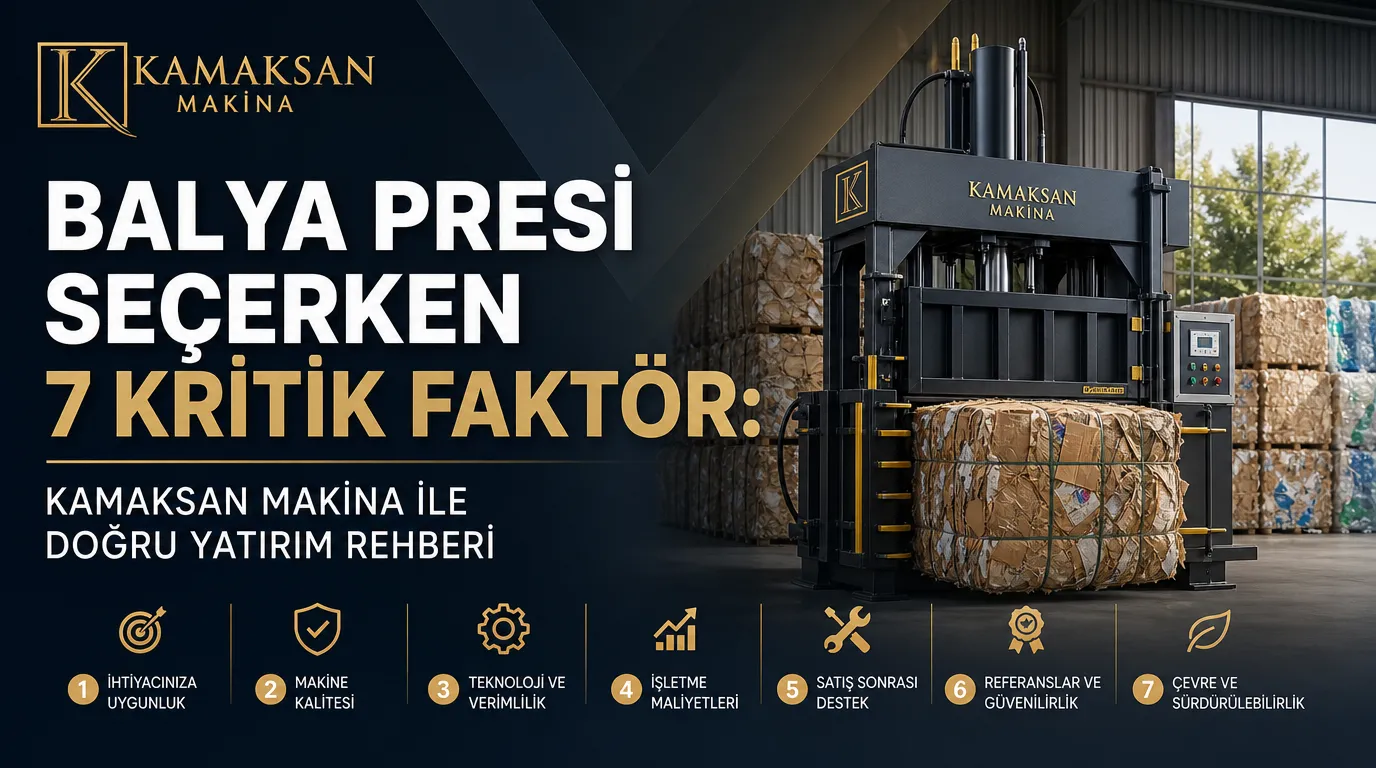
7 Critical Factors When Choosing a Baler: Your Kamaksan Machinery Investment Guide
Selecting the right baler is crucial for waste management and recycling. Discover 7 key factors with Kamaksan Machinery's expertise for a smart investment.
Latest developments in the industry, tips, and news from our company.
Selecting the right baler is crucial for waste management and recycling. Discover 7 key factors with Kamaksan Machinery's expertise for a smart investment.
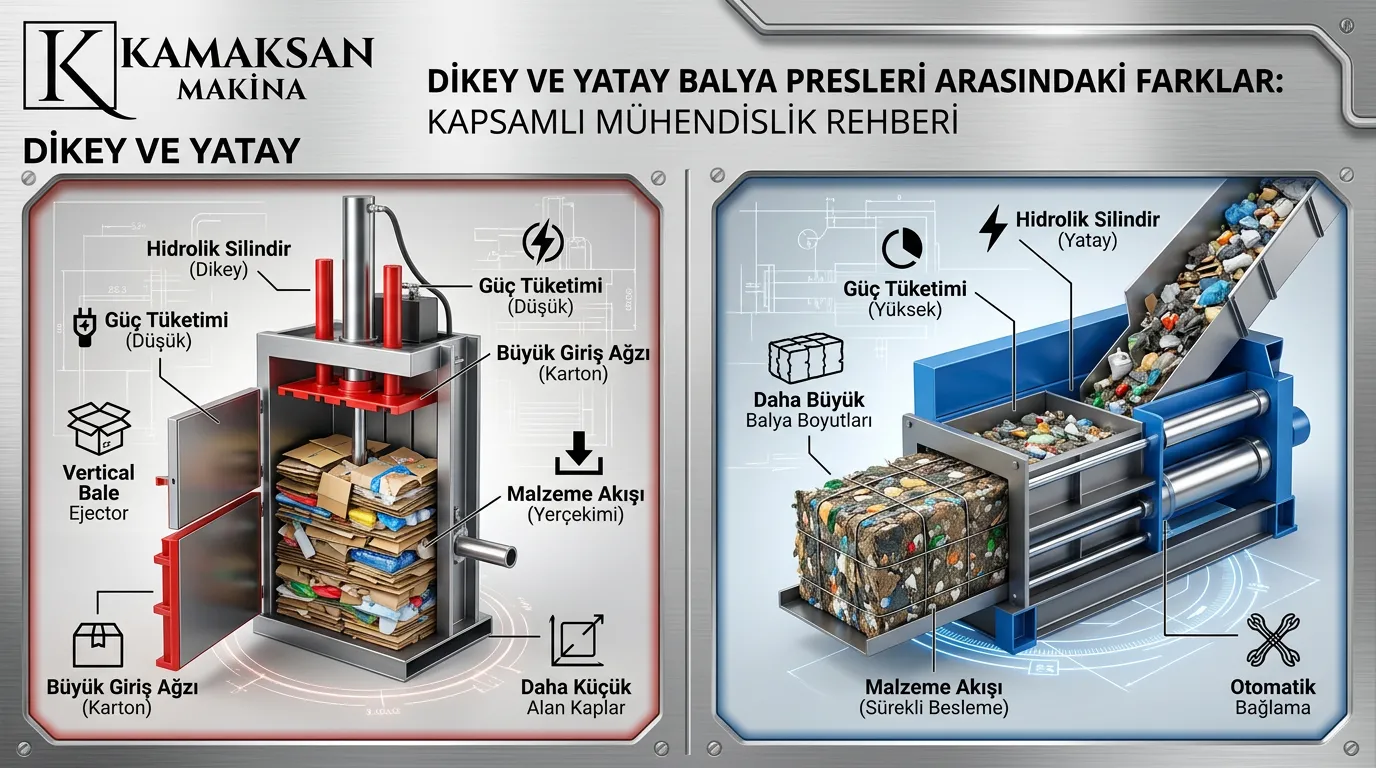
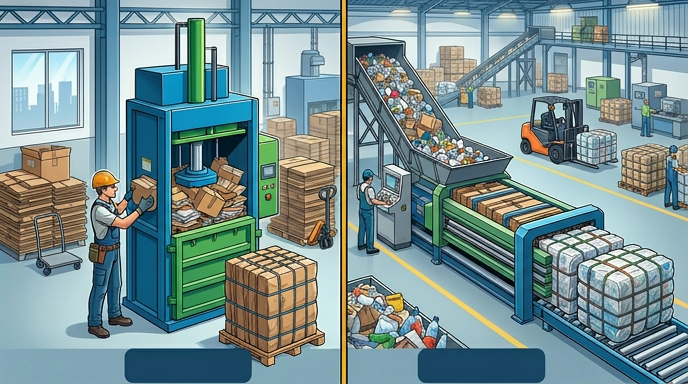
The key difference between vertical and horizontal baling presses lies in feeding direction, capacity, and footprint. Vertical balers compress top-down for businesses generating 500 kg - 3 tons of waste daily in limited spaces. Horizontal balers are for large recycling facilities, handling over 2 tons per hour with continuous, automatic feeding.
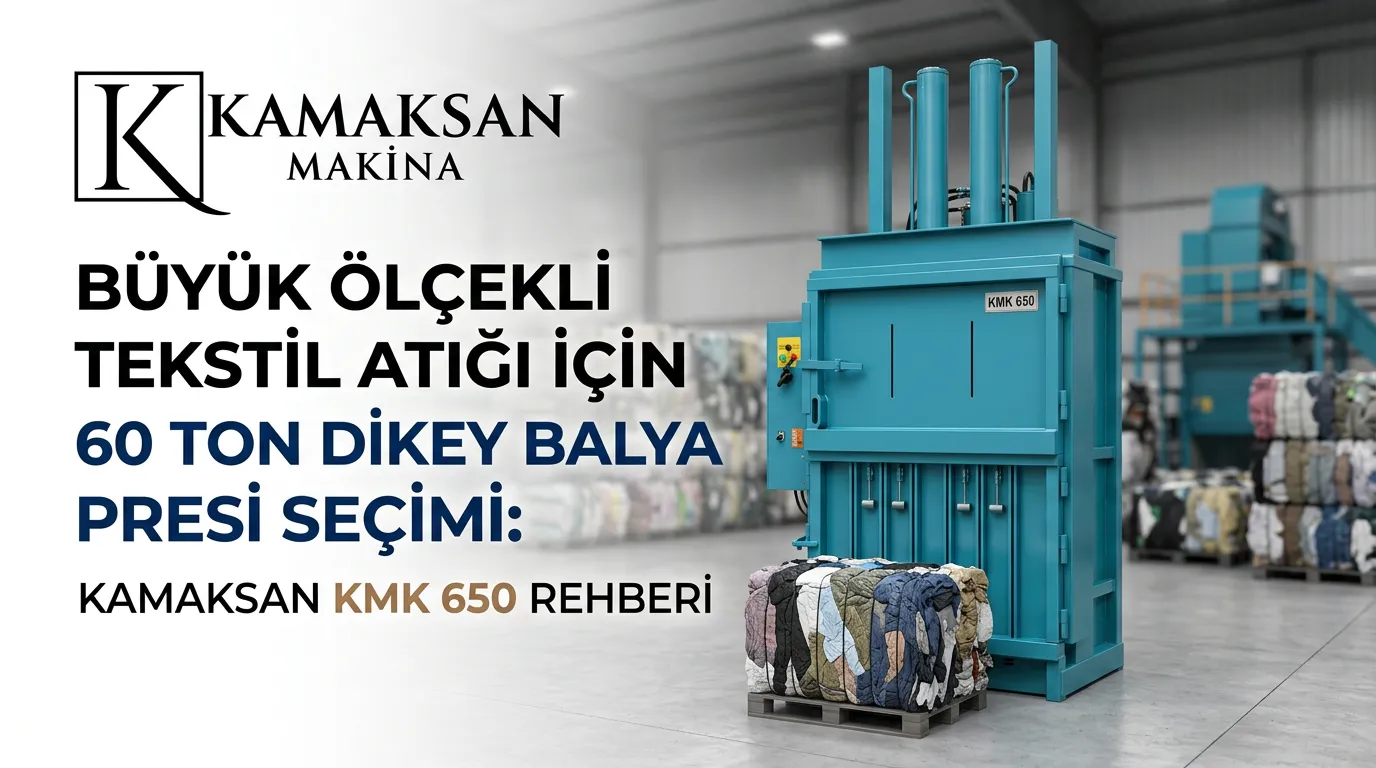
Selecting a 60-ton vertical baling press is crucial for facilities handling high-tonnage textile waste. Kamaksan KMK 650 offers efficiency with an 11 kW motor and 1500x1100x1100 mm bale dimensions.
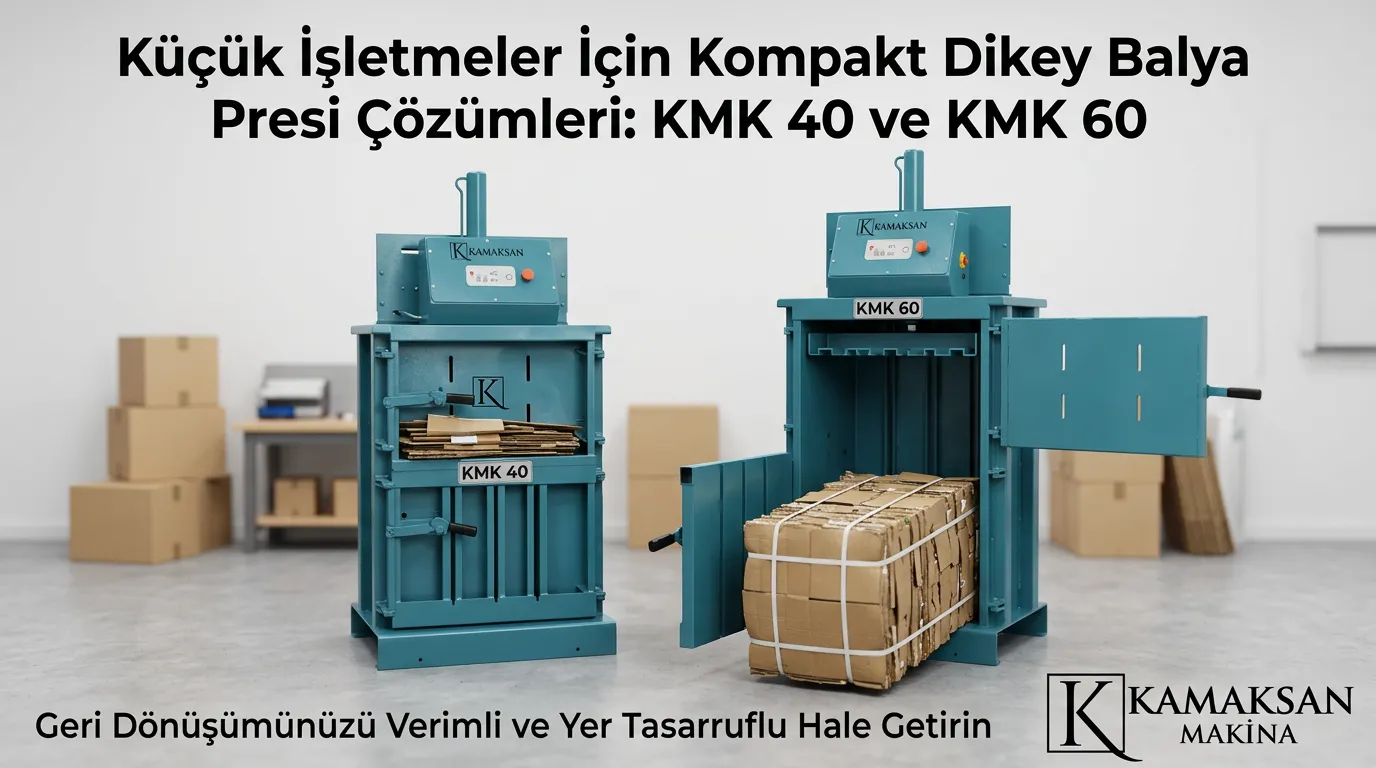
Kamaksan KMK 40 (8-ton) and KMK 60 (10-ton) compact vertical balers optimize paper and plastic waste management for SMEs with limited space, reducing operational costs and enhancing environmental sustainability.
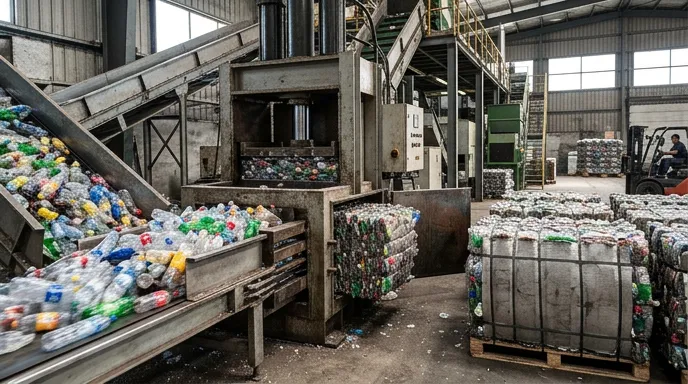
Discover how baler presses are essential for efficient PET bottle recycling, reducing volume, cutting costs, and enhancing sustainability.
Unsure whether to choose a horizontal or vertical baler? This guide compares both, helping you select the best recycling machine for your needs.
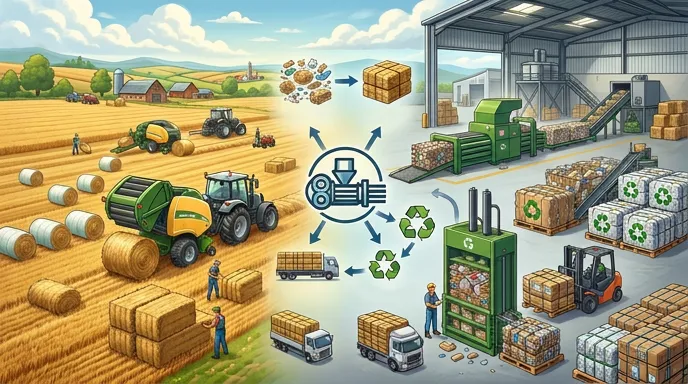
Discover what a baler press is, its essential types (vertical, horizontal), common applications, and significant benefits for modern waste management and recycling.